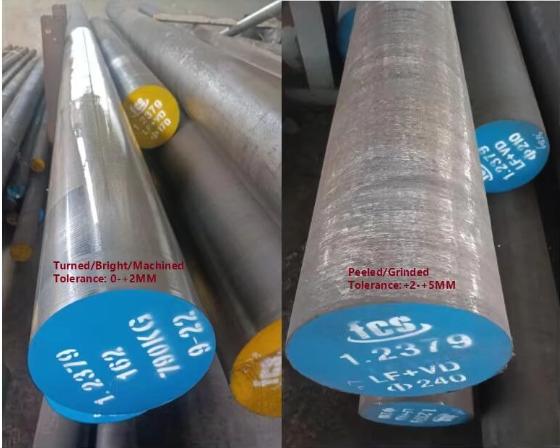
When it comes to producing high-quality molds, dies, and precision components, polishing is often the final step that determines the appearance, accuracy, and performance of the finished surface. However, polishing quality does not depend on polishing techniques alone. The type and quality of steel being polished play an equally important role.
Tool steel is specifically engineered to provide the hardness, wear resistance, toughness, and dimensional stability needed for demanding industrial applications. Among the various options available, Stainless tool steel is widely used when corrosion resistance and a high-quality surface finish are important. Selecting the right grade can make polishing easier, more consistent, and more efficient.
Another commonly used grade is 1.2083 tool steel, which is a chromium-alloyed stainless mold steel known for its good polishability and corrosion resistance. Understanding why steel quality matters can help manufacturers achieve better surface finishes while reducing production problems.
What Makes Tool Steel Suitable for Polishing?
Polishing involves progressively removing small imperfections from a steel surface until the desired smoothness and appearance are achieved. The response of the material during this process depends heavily on its chemical composition, microstructure, hardness, and cleanliness.
High-quality tool steel typically has a carefully controlled composition and uniform microstructure. These characteristics allow abrasives to remove material consistently rather than producing uneven areas, scratches, or surface defects.
Poor-quality or unsuitable steel may contain inclusions, segregation, excessive impurities, or inconsistent hardness. During polishing, these imperfections can become visible and may prevent the surface from reaching the required level of smoothness.
For this reason, selecting appropriate steel before machining and polishing is an important part of achieving a high-quality finished product.
The Importance of Stainless Tool Steel
Stainless tool steeloffers an important combination of corrosion resistance, hardness, and surface-finish potential. These characteristics make stainless grades particularly useful for molds, dies, cutting tools, and components that require both durability and an attractive polished surface.
Corrosion resistance is especially valuable in applications where moisture, chemicals, or other environmental factors may affect the steel. A corrosion-resistant material can maintain its surface condition for longer, helping protect the quality of a polished component.
Stainless tool steels can also provide a suitable foundation for fine polishing when the material has the appropriate composition and heat treatment. However, simply choosing a stainless grade does not guarantee a perfect finish. Proper machining, heat treatment, grinding, and polishing procedures remain essential.
Why 1.2083 Tool Steel Is Commonly Used for Polished Molds
1.2083 tool steel, also identified as X42Cr13 and 420 stainless tool steel, is frequently selected for applications where corrosion resistance and surface finish are important.
This grade is particularly associated with plastic molds and tooling applications. Mold surfaces often need to be highly polished because the quality of the mold surface can influence the appearance and quality of the molded product.
A suitable grade such as 1.2083 can provide a combination of properties that supports this requirement. When correctly heat treated and processed, it can offer good hardness, wear resistance, corrosion resistance, and polishability.
The material's performance also makes it useful where the mold needs to maintain dimensional stability and surface quality during repeated production cycles.
Steel Cleanliness Affects the Final Surface
One of the most important factors in polishing is the cleanliness of the steel.
Even when a steel grade has excellent theoretical polishing characteristics, non-metallic inclusions and other internal imperfections can create problems during finishing. These imperfections may appear as small pits, spots, or lines after polishing.
High-quality steel with controlled manufacturing processes generally provides a more uniform structure. This gives the polishing process a more consistent surface to work with.
For applications requiring mirror-like finishes, steel cleanliness becomes especially important. A surface may appear smooth during early polishing stages but reveal defects during the final polishing process.
Hardness and Heat Treatment Matter
The hardness of tool steel also affects polishing behavior. If the steel is too soft, the polishing process may produce smearing or other surface problems. If the material has been improperly heat treated, variations in hardness can make it difficult to achieve a uniform finish.
Correct heat treatment helps develop the mechanical properties required for the intended application. It can also contribute to consistent polishing behavior across the entire component.
For this reason, manufacturers should consider the complete material-processing chain rather than looking only at the steel grade. Steel selection, heat treatment, machining, grinding, and polishing all work together to determine the final result.
Machining Quality Comes Before Polishing
Polishing cannot always correct poor machining.
If deep tool marks, excessive grinding scratches, or uneven surfaces remain before polishing begins, additional polishing time will be required to remove them. In some cases, defects may remain visible even after extensive finishing.
A well-controlled machining process creates a more uniform starting surface. Grinding should then progressively remove machining marks before fine polishing begins.
Using appropriate abrasives and changing to finer grades gradually can help prevent deep scratches from being carried into later polishing stages.
This is particularly important for molds made from stainless tool steels, where the final surface may need to meet demanding visual and functional requirements.
The Benefits of High-Quality Tool Steel
Choosing high-quality tool steel can provide several advantages during manufacturing.
1. Better Surface Finish
A clean and uniform steel structure can make it easier to achieve a smooth and consistent polished surface.
2. Reduced Polishing Time
When the material is suitable for polishing and has been properly machined and heat treated, fewer corrective operations may be necessary.
3. Improved Mold Performance
A polished mold surface can help improve the appearance and consistency of molded products.
4. Greater Corrosion Resistance
Stainless tool steels can provide better resistance to corrosion than conventional non-stainless tool steels in appropriate applications.
5. Longer Service Life
The combination of hardness and wear resistance can help tooling withstand repeated production cycles.
Common Problems Caused by Poor Material Selection
Selecting a tool steel without considering the required surface finish can lead to several problems. Manufacturers may experience inconsistent polishing, excessive polishing time, surface defects, or premature wear.
For example, a mold intended for a highly polished plastic component requires different considerations from a tool where surface appearance is less important. The steel should therefore be selected according to the application's mechanical, environmental, and finishing requirements.
Material certificates and quality documentation can also be useful when purchasing tool steel for demanding applications. These documents help manufacturers verify the grade and relevant material characteristics.
How to Get Better Results When Polishing Tool Steel
A successful polishing process usually starts long before the polishing machine or abrasive is used. Several basic practices can improve the final result:
- Select a tool steel grade appropriate for the application.
- Purchase material from a reliable steel supplier.
- Confirm the material grade and quality documentation.
- Use proper heat-treatment procedures.
- Remove machining marks before fine polishing.
- Progress through abrasive grades systematically.
- Keep polishing tools and work areas clean.
- Avoid introducing deep scratches during finishing.
- Inspect the surface between polishing stages.
- Use suitable polishing compounds for the desired finish.
These steps can help reduce rework and improve consistency.
Choosing the Right Steel for the Job
There is no single tool steel grade that is ideal for every polishing application. The correct choice depends on the required hardness, corrosion resistance, wear resistance, toughness, dimensional stability, and surface finish.
For applications involving polished plastic molds, stainless mold steels such as 1.2083 can be considered when their properties match the requirements of the project.
Manufacturers should also consider the intended production environment. A tool exposed to moisture or corrosive materials may benefit from stainless properties, while another application may prioritize toughness or resistance to high-temperature conditions.
The key is to evaluate the complete set of requirements before purchasing or machining the material.
Conclusion
The quality of tool steel has a direct influence on the polishing process and the final surface of a manufactured component. A carefully selected, clean, and properly heat-treated material provides a better foundation for achieving consistent results.
Stainless tool steel can be a practical choice for applications where corrosion resistance and surface quality are important. Likewise, 1.2083 tool steel is widely associated with mold-making applications that require a combination of hardness, corrosion resistance, and good polishability.
Ultimately, achieving a high-quality polished surface requires more than advanced polishing equipment. It begins with choosing the right steel, maintaining good machining practices, applying suitable heat treatment, and following a controlled finishing process. By paying attention to material quality from the beginning, manufacturers can improve surface finish, reduce rework, and produce tooling that performs reliably throughout its service life.